Executive Career Strategy

London CV Writer

Pitch Your True Value

Executive CV Writer, London

" A senior career cannot be squeezed into one CV and expected to serve every purpose. Different opportunities require different evidence, while LinkedIn and executive bios must position you for audiences beyond a single application. Knowing what to emphasise, exclude and make visible is critical. My bespoke service builds the private evidence base and public positioning needed to present a clear, credible and adaptable case to the market."

~ Elle Bradshaw, Owner of London CV Writer.


Consultant to FTSE100 directors, distinguished individuals
with KBE, OBE, and MBE honours, and high-profile business professionals.

Choose Your Career Strategy:

Master CVs, LinkedIn Profiles, Executive Bios & Career Positioning

A senior career move is rarely solved by one document. You may need a Master CV to capture your accomplishments and clarify your value, or LinkedIn and an executive bio to make your authority, values and direction easier to see, remember and trust.

Description Purchase
A Executive Master CV Development Service
⇒ Strategic foundation plus two bespoke applications.
£795
B LinkedIn Profile and Executive Bio
⇒ Public positioning, reputation, visibility and authority
£455

Need a Specific Application?

If your direction is clear and the immediate need is a CV or role-specific application, the following services may be sufficient.

Description Purchase
1 Senior Executive CV
⇒ General positioning
£315
2 Senior Executive CV, Cover Letter and LinkedIn Profile
⇒ Role alignment and LinkedIn positioning
£465
3 Senior Executive CV, Cover Letter and Selection Criteria Response
⇒ Criteria-led application
£645
4 Comprehensive Executive Application Service
⇒ Complex executive appointment
£795

Rates for CV packages include Zoom or phone meetings as required. Extra charges may apply for complex Selection Criteria.

My credentials and approach

You work directly with me. I combine recruitment, marketing, research and writing experience with an evidence-led approach to executive career strategy. More...

Credentials

You work directly with me throughout. I undertake the research, questioning, analysis, writing and revisions personally. Your work is not passed to junior writers, contractors or a production team.
Professionally established. I am a founding member of the UK-based CVRA and a CVR-certified CV writer. My work has been independently assessed against professional standards covering writing, job-application knowledge, experience and integrity.

Experienced at senior level. My clients have included FTSE 100 directors, board and NED candidates, senior professionals and distinguished individuals honoured with KBE, OBE and MBE awards. I also work on complex public-sector, political, third-sector, international and specialist appointments.

Broad sector experience helps me ask better questions. I have worked across commercial, professional, public and third-sector markets. Your knowledge remains central, but familiarity with different sectors, appointment processes and audiences helps me recognise where evidence needs more explanation or a different emphasis.

Research and analysis are central to the work. I hold a degree in Librarianship and previously worked as an information scientist. That background is directly relevant to career strategy: finding and testing information, resolving gaps and inconsistencies, and turning extensive career evidence into a clear and usable case.

Strategy comes before documents. We first clarify the roles, audiences and opportunities you may pursue. The aim is not to improve every sentence of an old CV, but to determine what your experience can credibly support and how it should be presented.

Evidence is questioned, not merely transcribed. Achievements need context, unsupported claims may need to be removed and experience that matters greatly to you may not be the strongest evidence for a particular audience. I ask the questions needed to establish scale, judgement, contribution and results.

Private evidence and public positioning require different treatment. A Master CV preserves the fuller career record. LinkedIn and an executive bio present a selective public account of your authority, values, affiliations and direction. Each must serve its own audience without contradicting the others.

The process is collaborative and confidential. We communicate directly as the work develops, with further questions and revisions where needed. Sensitive information is handled carefully, and the final material must remain credible in your voice and defensible in conversation or at interview.

How the Work Develops

  • Clarify the Direction

    We define the roles, audiences and outcomes you are considering, then determine which strategic work and documents are genuinely needed.
  • Examine the Evidence

    I review your career history, accomplishments and existing material to identify strong proof, missing context, stale positioning and transferable value.
  • Define the Audiences

    We consider the employers, recruiters, search consultants, boards, clients, investors, professional contacts and other people you may need to influence.
  • Build the Positioning

    I identify the central propositions, evidence and themes that should define your value, along with likely concerns that may need to be addressed.
  • Create the Materials

    I develop the agreed Master CV, applications, LinkedIn profile, executive bio or recruiter-facing pitches. Each has a different function and should not merely repeat the others.
  • Test and Refine

    The material is checked for factual accuracy, evidential strength, consistency, audience relevance and a credible personal voice.

The Master CV process

It builds a private evidence base, tests your accomplishments against target audiences and supports role-specific CVs, propositions and pitches. More...
A Master CV is not a longer version of the document sent to employers. It is a private working record from which selective CVs, applications, propositions and pitches can be developed.

My Two-Phase Executive Career Strategy Service

This service is for senior executives who need more than another CV rewrite. Phase 1 builds a private, well-evidenced account of your career and clarifies where your strongest value lies. Phase 2 applies that work to two live opportunities, showing how the evidence should be selected, reframed and aligned in practice. You work directly with me throughout, and the process can be adapted to your target roles, timing and current level of readiness.

Phase 1: Build the Evidence and Positioning

  • Career Direction and Audiences - We begin with the roles, sectors, appointment types and longer-term opportunities you are considering. We also identify the employers, intermediaries and other audiences the Master CV may need to support.
  • Evidence Audit - I review your existing CV, LinkedIn profile and supporting material to identify strong evidence that is buried, missing, lacking context or being given the wrong weight.
  • Master CV Development - I create a private working record of your career history, qualifications, responsibilities, accomplishments, references and supporting evidence. It is not submitted to employers intact.
  • Accomplishment Development - We recover and examine the problems solved, decisions made, opportunities seized and results achieved. Each accomplishment needs enough context to establish scale, contribution and credibility.
  • Audience Relevance - Accomplishments are tested against prospective target audiences. Evidence that matters to an employer may need different framing for a recruiter, board, investor, client or professional contact.
  • Transferable Value and Career Narrative - I identify strengths that can travel across sectors, organisations and appointment types, then clarify the thread connecting your experience to the work you want to pursue next.
  • Propositions and Pitches - We develop clear statements about the value you offer, the problems you solve and the opportunities for which you are well suited. This includes concise recruiter and networking pitches, sometimes called elevator pitches, derived from evidence rather than improvised under pressure.
  • Gaps and Readiness - The process also identifies missing evidence, weak claims, unexplained transitions and areas that may require further research or development before the market tests them for you.

Phase 2: Apply It to Two Live Opportunities

  • Opportunity Assessment - I help you assess two agreed roles against your objectives, experience and likely prospects, so that effort is directed towards opportunities worth pursuing.
  • Employer and Role Research - I examine the published requirements, employer context, market conditions and likely reason for each appointment. This includes the explicit criteria and the concerns that may sit behind them.
  • Application Strategy - For each role, I determine the central case for candidacy, the evidence that should lead, the likely objections and the appropriate tone for the employer and decision-makers.
  • Two Bespoke Applications - I create a role-specific CV and cover letter for each agreed opportunity, drawing from the Master CV rather than repeatedly adapting the same general document.
  • Pitch and Interview Preparation - We develop a concise account of your relevance to each role and identify the accomplishments, decisions and examples you should be ready to explain when challenged.
  • Guidance for Future Use - The two applications demonstrate how the Master CV should be used: what to select, what to leave out and how the same evidence may need to be framed differently for another audience.
What you receive. A private Master CV, an accomplishment bank, clearer propositions and pitches, two bespoke CVs and cover letters, and a practical foundation for future applications and recruitment conversations.

Selection criteria responses, LinkedIn profiles, executive bios and other substantial documents can be scoped separately where required.

LinkedIn and executive bio

LinkedIn helps the right people find and understand you. An executive bio supports boards, advisory work, speaking, media and professional introductions. More...
Public positioning is not a shortened CV placed online. It is a selective account of your authority, relevance and direction, written for people who may encounter you before any formal application exists.
The audience comes first. A LinkedIn profile may need to support recruiter visibility, executive search, network development, commercial credibility, board work, consulting, speaking or professional authority. Those objectives should be defined before the profile is written.

LinkedIn has a broader role than the CV. A CV carries detailed evidence for a particular role. LinkedIn must help recruiters, search consultants, clients, colleagues and other professional contacts understand quickly where your expertise lies and why you may be worth approaching.

An executive bio serves different settings. Board and advisory work, speaking, media appearances, professional introductions and portfolio opportunities often require a concise public account of your authority, relevance and current direction rather than a conventional CV.

A bio can reveal more of the person. It may also signal selected values, affiliations, causes, networks and interests that help others understand not only what you have done, but what you stand for and where you may fit.

The two outputs should align without duplicating one another. LinkedIn is searchable, networked and designed for continued professional visibility. The executive bio is portable and can be used on websites, board papers, programmes, proposals, media material and introductions.

Substance still matters. Public positioning requires evidence, career context and a clear proposition. LinkedIn already contains a sufficient quantity of highly 'polished' business slop; adding another generic profile is unlikely to improve matters.

Your voice must remain recognisable. The profile and bio should sound credible to people who know you and remain comfortable to use in conversation. Inflated language may attract attention for the wrong reason.

Visibility does not end with the rewrite. Authority may also be strengthened through useful posts, articles, comments, speaking, media work and visible engagement with your field. The profile provides the foundation, not the entire strategy.

The service can stand alone. A Master CV may provide useful raw material, particularly where the career history is extensive or fragmented, but LinkedIn and executive bio work can be scoped separately where the evidence and direction are already sufficiently clear.


Frequently Asked Questions

Career Preparation, Redundancy, Master CVs, Public Positioning & Choosing the Right Service

Preparing for what comes next?

Career strategy is not only for those facing job insecurity. It helps successful executives prepare before an opportunity, restructure or change in direction forces hurried decisions. More...
Career strategy is not a rescue service for executives in difficulty. It is often most useful when there is still time to think.
Preparation preserves choice. Before an opportunity or threat becomes urgent, you can assess which roles, sectors and forms of work are genuinely worth pursuing, rather than defaulting to the nearest familiar option.

Success does not guarantee readiness. A long tenure or strong current performance may leave little reason to maintain a Master CV, recover old evidence or explain your value outside the organisation that already knows it.

Opportunity seldom arrives conveniently. A recruiter call, board approach, internal change or attractive vacancy may require a credible response before there is time to reconstruct decades of experience.

Strategy prevents last-minute CV surgery. A private evidence base and clear positioning make it easier to derive role-specific CVs, recruiter pitches, LinkedIn content and interview examples without starting again each time.

Direction need not mean one fixed destination. The process can compare several plausible routes and establish what evidence supports each, while keeping your wider options open.

Good preparation creates adaptability. The aim is not to predict every opportunity. It is to be ready to respond intelligently when the right one appears.

Facing redundancy or change?

Early preparation protects choice. It gives you time to assess realistic options, recover evidence and position yourself before urgency begins making decisions for you. More...
Redundancy can be abrupt. The career decisions that follow do not have to be improvised.
Start before certainty if you can. Restructuring, a change of ownership, a new chief executive or declining investment in your function may justify preparation long before a formal announcement is made.

Separate the role from your value. Redundancy reflects an organisational decision, not a reliable judgement on the continuing value of your experience. The work is to identify where that value now transfers and who is likely to need it.

Recover the evidence while it is accessible. Achievements, project context, figures, board exposure and stakeholder evidence are easier to capture while the detail and supporting material remain available.

Test more than one route. The next move may involve a similar role, a different sector, advisory work, consulting, a portfolio career or a board appointment. Each route requires a different emphasis.

Account for market change. AI, regulation, consolidation and changing business models may alter which aspects of your experience carry the greatest weight. Strategy helps distinguish durable value from responsibilities the market is beginning to commoditise.

Prepare from evidence, not alarm. The objective is to widen informed choice and reduce avoidable haste, not to turn every rumour into a career emergency.

Applications going nowhere?

Repeated rejection may reflect weak targeting, generic evidence or missed selection criteria. More applications rarely fix an argument that is answering the wrong brief. More...
When several applications produce no interview, sending more of the same is activity rather than strategy.
Diagnose the pattern first. The problem may lie in role choice, ATS compatibility, weak alignment, missing selection criteria, an unclear proposition or evidence that is difficult to find and trust.

Distinguish fit from presentation. A well-written application cannot manufacture suitability. Equally, a suitable candidate can be screened out when the evidence does not answer the test being applied.

Review the targets. Broadening the search after rejection can make the proposition even less coherent. It may be better to narrow the role family, level, sector or appointment context before revising the documents again.

Research beyond the advert. Growth, succession, recovery, regulation, culture and previous appointment failures may all shape what decision-makers are really trying to secure or avoid.

Rebuild the evidence base where needed. If every application depends on the same thin set of achievements, the immediate task may be to recover stronger examples and context rather than simply improve the wording.

Use rejection as data, not a verdict. Patterns can reveal where the strategy is weak. They do not, by themselves, prove that the candidate has little to offer.

Still rewriting one CV?

Repeatedly cutting and adding to one document has limits. A Master CV creates the evidence base from which stronger, role-specific CVs can be built. More...
If every application begins by dismantling the same CV, the problem may be the starting point rather than the latest edit.
A submission CV is not an archive. It should contain only the evidence needed for a particular role or a defined market position. Trying to preserve a whole career within it makes each new version harder to control.

Layered edits create distortion. Years of adding recent roles, retaining old material and inserting keywords can leave the document overlong, repetitive and built around several incompatible targets.

A Master CV keeps the raw material elsewhere. It records full chronology, scope, achievements, judgement, transferable strengths and supporting detail without forcing all of it into a document for employers.

Specific CVs are then derived, not improvised. The relevant evidence can be selected and weighted against each employer’s stated and unstated needs.

Preparation becomes faster without becoming superficial. You are not searching old files or memory under deadline pressure, nor inventing a new proposition from scratch for every vacancy.

The argument also carries into interview. A stronger evidence base provides examples that can be recalled, explained and defended when the written claims are tested.

What is a Master CV?

It is a private evidence base that records and tests your accomplishments, then supports targeted CVs, propositions and pitches for different career audiences. More...
A Master CV is private career infrastructure: a working record of your accomplishments, evidence and positioning from which specific applications, propositions and pitches can be developed.
It is not sent to employers intact. Its purpose is to preserve the full career record so that each submission CV can remain selective, relevant and reasonably succinct.

It creates an accomplishment bank. Achievements are recorded with the problem, action, result, scale and circumstances needed to make them credible. This prevents valuable evidence being reduced to a vague claim or forgotten altogether.

It tests relevance by audience. The same accomplishment may matter differently to an employer, recruiter, search consultant, board, investor or professional contact. The Master CV helps determine which evidence supports each target and how it should be framed.

It clarifies your propositions. Patterns across your career can be distilled into clear statements about the problems you solve, the value you offer and the roles or opportunities for which you are well suited.

It supports concise pitches. Applications, recruiter approaches, networking conversations and interviews often require a short, persuasive explanation of who you are and what you offer. These executive pitches, sometimes called elevator pitches, should be derived from evidence rather than improvised under pressure.

It supports several outputs. Role-specific CVs, cover letters, selection criteria responses, LinkedIn positioning, executive bios, recruiter pitches and interview examples can all draw from the same source.

It remains a working asset. Its value grows as new accomplishments, changing targets and stronger evidence are added, rather than reconstructed every few years under deadline pressure.

Is AI changing your role?

AI and restructuring may alter which strengths carry value. Strategy helps identify what remains distinctive, where it transfers and how to position it credibly. More...
AI may remove tasks, reshape functions or change the standard expected of leaders. It does not affect every role in the same way, and alarm is a poor substitute for analysis.
Separate tasks from executive value. Routine production may be automated while judgement, accountability, influence, governance and decision-making under uncertainty become more important.

Examine how your function is changing. The relevant question is not whether AI exists, but what it is changing in your sector, operating model, team structure and employer expectations.

Identify evidence of adaptation. Employers may look for examples of technology adoption, workforce redesign, risk management, process change or the ability to lead people through disruption.

Do not claim expertise you do not have. Credible positioning distinguishes informed leadership from technical proficiency. Pretending to be an AI specialist after attending two webinars is unlikely to survive an interview.

Translate durable strengths. Commercial judgement, stakeholder confidence, regulatory understanding, creativity and experience of difficult change may travel well even when the original role is being reshaped.

Position for the market that is emerging. Career strategy should connect your evidence with credible future demand, rather than merely defend the job description you already have.

Changing sector or direction?

A move into a new sector, geography or role needs more than transferable claims. The evidence must be translated into value the new audience will recognise. More...
Transferable value is not established by declaring that your skills are transferable. The reader needs to see the connection.
Define the destination before rewriting the history. A sector move, international move, step into consulting or transition towards board work each requires a different proposition.

Understand the new audience’s concerns. Decision-makers may question sector knowledge, pace, commercial exposure, regulation, cultural fit or whether your previous scale is genuinely comparable.

Choose evidence that travels. Judgement under pressure, transformation, stakeholder influence, governance, growth and recovery may be more persuasive than detailed knowledge tied to the former sector.

Make the bridge explicit. The CV, LinkedIn profile and recruiter pitch should explain why past experience is relevant in the new context. Leaving the reader to translate it is generous to the point of recklessness.

Address risk without becoming defensive. A credible case acknowledges the gap, then provides evidence that reduces uncertainty about your ability to operate effectively in the new environment.

Different routes may need different propositions. One public profile can support a broad direction, but role-specific applications still need selective evidence and a clear answer to that employer’s particular concerns.

CV, LinkedIn or both?

A CV supports specific applications. LinkedIn and an executive bio position you publicly for recruiters, boards, networks, clients and opportunities that may never be advertised. More...
A CV, LinkedIn profile and executive bio should support the same central proposition, but they do not perform the same job.
The CV carries formal evidence. It is usually the principal document for a specific application and must be aligned with the role, employer, selection criteria and likely screening process.

LinkedIn supports discovery and authority. Recruiters, search consultants, board contacts, clients and professional peers may assess your profile before any vacancy or formal application exists.

An executive bio serves other settings. Board and advisory work, speaking, media appearances, professional introductions and portfolio opportunities often require a concise public account of your authority, relevance and current direction. It can also signal selected values, affiliations, causes, networks and interests that help others understand not only what you have done, but what you stand for and where you may fit.

Alignment does not mean duplication. Copying the CV into LinkedIn wastes the wider public format. The profile should communicate direction, expertise, interests and credibility to more than one immediate employer.

Public positioning needs an audience. A profile built for headhunters may differ from one intended to attract clients, board opportunities, media interest or a stronger professional network.

The sequence depends on the need. A live application may make the CV urgent. A longer-term market strategy may justify beginning with the evidence base, LinkedIn and bio positioning.

Which service do I need?

Some clients need a Master CV foundation; others need LinkedIn and bio positioning, or a specific application. The initial discussion determines the right scope. More...
The right service depends on the problem to be solved. Buying the largest package is not a substitute for diagnosing it properly.
A Master CV may be the foundation. This is most useful when evidence is scattered, the career is long or complex, several directions are being considered, or future applications need stronger raw material.

LinkedIn and a bio may be the priority. Public positioning can come first when the aim is recruiter visibility, board or advisory work, network development, client attraction, speaking or media opportunities.

A specific application may be enough. If the target is clear, the evidence is strong and the immediate need is one defined role, a role-aligned CV, cover letter or criteria response may be the more proportionate solution.

Some clients need the elements connected. A Master CV can establish the evidence, while LinkedIn and the executive bio translate the wider proposition for public audiences and specific CVs address individual opportunities.

The initial discussion is diagnostic. I review what you are trying to achieve, what material already exists, where the gaps lie and which output is likely to provide genuine value.

The scope should follow the need. Career strategy is meant to prevent the wrong problem being solved attractively.

Complimentary phone call with Elle

Click on the phone icon at any time, day or night, to schedule a complimentary 30-minute call at a time that is convenient for you.


Discretion and privacy. All discussions, documents and personal information are treated in strict confidence. I work with you directly and never disclose your identity, instructions or materials to any third party without your express permission.

Not sure what you need?

Answer a few short questions about your current career situation. We’ll direct you to the information and approach most likely to meet your needs.

Process: Master CV and Career Strategy

This process turns your career history into a structured evidence base, clear propositions and application material that can be adapted to different opportunities.

Process: LinkedIn and Executive Bio

This process turns your experience into a clear public position, aligning your LinkedIn profile and executive bio with the audiences you want to reach.

About Elle Bradshaw

Hello, I’m Elle. I personally handle every project, so your project is not passed to a CV mill, contractor, junior writer or bot. With more than fifteen years in recruitment marketing and career strategy, I’ve witnessed why strong candidates are shortlisted, and why equally strong candidates are screened out.

Given the ocean of ordinariness in poorly targeted and inartfully GPT’d executive CVs, it helps that I am also a qualified marketer, author and seasoned HR consultant. I understand how to turn career history into a persuasive pitch, focused on the employer’s needs rather than the candidate’s preferred autobiography.

My first loves were creative writing and puzzle-solving, which turns out to be useful in executive applications. The work is part analysis, part evidence, part language and part judgement: teasing out what an employer needs, matching the right experience to those needs, reading the cultural cues and helping the application clear the gatekeepers en route to interview.

This eclectic background gives me an unusual mix of skills: the marketing discipline to tease out employer needs, the HR experience to recognise how applications are screened, the writing ability to craft persuasive narratives, and the digital nous to create documents that can clear ATS filters without losing their human voice or executive credibility.

Contact Elle

Please complete this form to outline your situation and schedule a 30-minute chat to discuss your needs before committing to my executive CV services. I will revert with available time and date options.


Book a 30 min. phone call with Elle

Click on the phone to book a complimentary 30 minute call to discuss your Executive career trajectory, at a time that suits you.

The foundation of career strategy

The strongest application sits in the central overlap. The shift comes when executives stop leading with duties and scale, and instead connect their evidence to the employer’s needs and market pressures.

  1. Your attributes: Your knowledge, achievements, skills and evidence of value.
  2. Job description: The stated and implied strategic and operational requirements for the appointment.
  3. The market: The wider trends, pressures and challenges shaping the employer and its sector.

This shows why every top executive CV and its accompanying documents must be aligned to the selection criteria, needs, and situation of each prospective employer's organisation. Venn and art of the CV (Bradshaw and Edwards, 2022).

Aligning your CVs

The strongest application sits in the central overlap. The shift comes when executives stop leading with duties and scale, and instead connect their evidence to the employer’s needs and market pressures.

  1. Your attributes: Your knowledge, achievements, skills and evidence of value.
  2. Job description: The stated and implied strategic and operational requirements for the appointment.
  3. The market: The wider trends, pressures and challenges shaping the employer and its sector.

Career Strategy Checklist

Many senior executives manage complex organisations more carefully than they manage their own careers. Records are scattered, key evidence is half-remembered, reputations are left to develop by accident and serious thought begins only when a closing date appears. These questions expose whether your career strategy is genuinely ready, or wanting.

Accomplishment Checklist

A long career produces plenty of responsibilities, activity and stories. Far less of it survives as evidence that can withstand scrutiny. The questions below test whether your accomplishments explain what changed, by how much, why it mattered and whether the people making your desired appointment would see the result as relevant.

Client Testimonials


Hi Elle, I just want to say thank you for the work you did to make my CV application for the CEO (of a major sporting body)* stand out. It has been a pleasure working and interacting with you during the process. You answered every question, right down to - what format should I send the application in. I would have got it very wrong, but you referred me back to the job ad and showed me what to do next, your patience with my obvious lack of knowledge of how to do these things is very much appreciated as I know I would have never gotten to the interview, despite being well known in the sporting world.
*organisation name withheld

- W.S. (CEO)


I've been working abroad for years, but had to come home because of COVID. Not having the first clue about putting together a CV and job application for Government positions (I'm an ex-copper and worked In Immigration) I trawled the internet and came across your site. From the first conversation, and then the meeting we had, I knew I had picked the right person to help me. And you did - great news I am now through to final interviews with the agency. The process has been long-winded but you have been there every step of the way, even down to the panic phone call when my browser got stuck and I couldn't upload the application, you talked me down off my panic tree and walked me through the steps. Couldn't have done it without you.

- A.P. (Law Enforcement)


Just wanted to let you know that the CV and cover letter were fantastic and we’ve had interview one, with interview two next week! This is going to be such a game changer for us as a family. While we have a very successful business at the moment, working as a Franchisee for one of the Premier Fast Food Brands* has been our ultimate goal and we would not have gotten this far without your help. We know there will be other requirements for your assistance as we move through the process, and I want to thank you in advance for helping us get to where we want to be at this point in our careers. Thanks again Elle and speak soon.
*organisation name withheld

- L & B.E (Franchisee Applicants)


Excellent strategic guidance throughout the process. The resulting CV and LinkedIn profile presented my experience far more clearly and positioned me much more strongly for senior opportunities.

- E.B.

More Reviews

The above are genuine reviews that are obviously anonymised for client confidentiality. I can provide referees upon request


Robot-led CV writing makes you sound generic, keyword-stuffed, foreign or misaligned to the job description. I can spot it a mile off, and so can most HR people. It’s the same wording, line spacing, punctuation and it's cliche-ridden. So ironically you might be rejected for not being a real person!

Elle Bradshaw in a The Daily Telegraph article by Liz Hoggard.

The Thinking Behind the Service

CV, London, UK

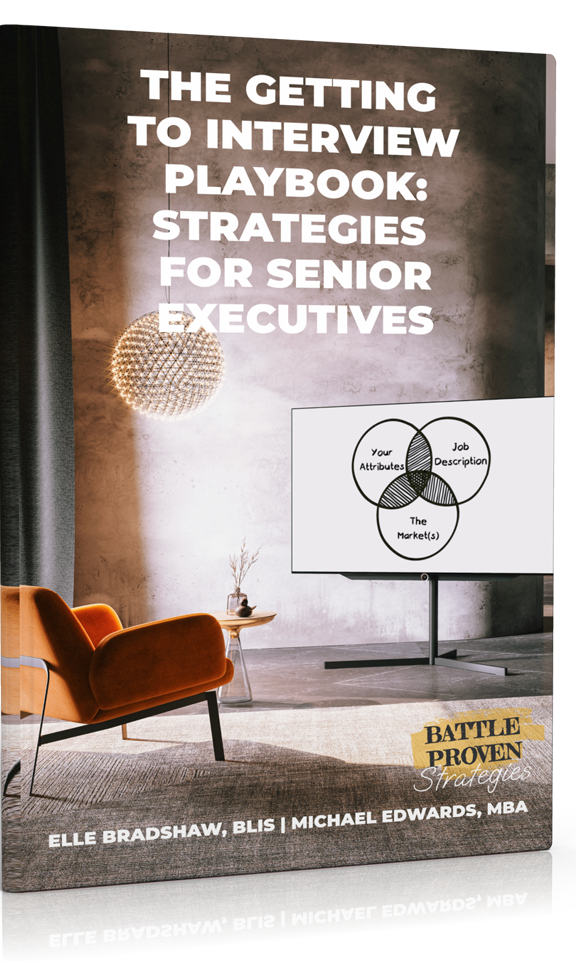
Getting to Interview Playbook - Why strong executives are screened out, how decision-makers assess risk, and how applications and interviews must answer both stated and unstated criteria.


Book a 30 min. phone call with Elle

Click on the phone to book a complimentary 30 minute call to discuss your Executive career trajectory, at a time that suits you.

CV, London, UK

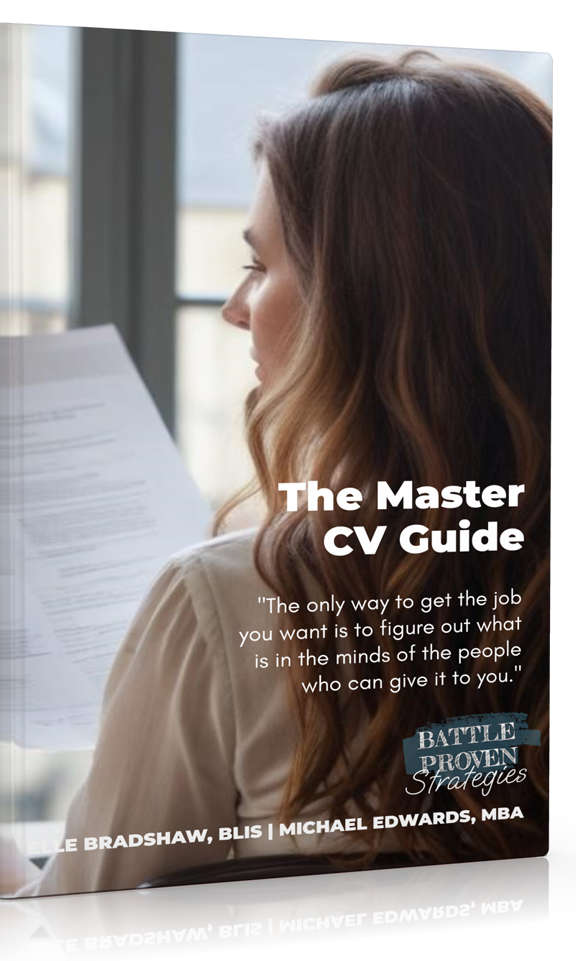
The Master CV Guide - Explains the evidence-gathering and career-infrastructure method that supports stronger CVs, applications, recruiter approaches and interview preparation.


CVs submitted to:

CV Writer, London

Some of the organisations where I have assisted clients in applying for employment or provided career coaching and outplacement services.

Clients' CVs submitted to:

Some of the organisations where I have assisted clients in applying for employment or provided career coaching and outplacement services.

Executive career strategy begins with direction, not document formatting. I work with senior executives, directors and C-suite leaders in London and across the UK to clarify target roles, define their strongest propositions and decide how their experience should be presented to employers, recruiters, boards and other decision-makers.

Strategic Executive CV Writing

An executive CV must do more than record responsibilities and career progression. It should present relevant evidence of leadership, commercial judgement, governance, change, influence and delivery. My executive CV writing service identifies what matters most for each appointment and builds a credible case around the employer’s needs.

Master CV Development

A Master CV provides the private evidence base behind future applications. It captures achievements, decisions, results, responsibilities and transferable value across your career. This structured career record can then support bespoke CVs, cover letters, selection criteria responses, recruiter approaches and interview preparation.

LinkedIn Profiles and Executive Bios

LinkedIn profiles and executive bios position senior leaders for audiences beyond a single vacancy. I help executives strengthen recruiter visibility, professional authority and market credibility while supporting board, advisory, consultancy, speaking and portfolio opportunities. Each profile is written for clearly defined audiences and objectives.

Board and C-Suite Application Strategy

Board and C-suite appointments are rarely decided by the published job description alone. Effective application strategy considers organisational priorities, market pressures, governance expectations, likely gatekeepers and appointment risk. This research determines which evidence to emphasise and how to make the candidate’s value easier to trust and defend.

Executive CV Writer in London

You work directly with an experienced executive CV writer, not an outsourced production team. I provide personal career strategy, Master CV development, LinkedIn profile writing, executive bios and bespoke application support for senior professionals in London, South East England and throughout the UK.