CVs, LinkedIn profiles and application strategy for senior executive, c-suite, board, political, public-sector, third-sector and professional appointments.
"
When it comes to crafting an effective CV, many senior executives may feel adrift in a sea of reverse-chronological job histories and qualifications. It's hard to know what to cull, what to highlight and how to align your evidence with an employer’s needs and overcome the hurdles en route to interview. My personal, bespoke, and human service is for those who need their experience curated, not merely transcribed. Each application is built around relevance, evidence, judgement and the gatekeepers who decide who is screened out."
~ Elle Bradshaw BLIS, Owner of London CV Writer
Consultant to FTSE100 directors, distinguished individuals
with KBE, OBE, and MBE honours, and high-profile business professionals.
Book a complimentary phone call with Elle
Click on the telephone icon at any time, day or night, to schedule a call at a time that is mutually convenient.
CV Fees
I’m Elle, owner of London CV Writer. When you engage my services, you work directly with me, not junior writers, offshore contractors or AI-led tools. I carefully review the role, selection criteria and likely hurdles between application and interview, then shape your evidence so your CV, LinkedIn profile or application is clear, credible and hard to dismiss.
Senior executives are not short of achievements. The problem is relevance. You must turn experience into evidence an employer will value, not a highly 'polished' account of what you would most like to say.
I'm sure you would like to have a conversation before proceeding, so please book a call below. Urgent? Phone me: 07537-130-007, sms me: 07537-130-007, or Whatsapp me.
Best option? Please fill in the form to give me context.
Discretion and privacy. All discussions, documents and personal information are treated in strict confidence. I work with you directly and never disclose your identity, instructions or materials to any third party without your express permission.
Initial Consultation
Please complete this form to outline your situation and schedule a 30-minute chat to discuss your needs. I will revert with available time and date options.
Rates for CV packages include Zoom or phone meetings as required. Extra charges may apply for complex Selection Criteria.
Career Strategy Options
A senior career move is rarely solved by one document. Sometimes you need the private evidence base: the Master CV that clarifies what you can credibly offer. Sometimes you need the public face: LinkedIn and a bio that make your authority easier to see, remember and trust.
Item
Description
Purchase
5
Executive Master CV Development Service
⇒ Strategic foundation plus two bespoke applications
You work directly with me throughout. I combine recruitment, marketing and writing experience with a personal process built around evidence, judgement and clear communication. More...
Credentials
You work directly with me throughout. I undertake the research, questioning, judgement, writing and revisions personally. Your work is not passed to junior writers, contractors or a production team.
Professionally established. I am a founding member of the UK-based CVRA and a CVR-certified CV writer. My work has been independently assessed against professional standards covering writing, job-application knowledge, experience and integrity.
Experienced at senior level. My clients have included FTSE 100 directors, board and NED candidates, senior professionals and distinguished individuals honoured with KBE, OBE and MBE awards. I also work on complex public-sector, political, third-sector, international and specialist appointments.
Research and analysis are central to the work. I hold a degree in Librarianship and previously worked as an information scientist. That background is directly relevant to executive CV work: finding and testing information, identifying what matters, resolving gaps and inconsistencies, and structuring extensive career evidence into a clear case.
The writing begins with the target. Depending on the service, I review the role, employer, selection criteria, market context and likely decision process before deciding what the documents should emphasise. The purpose is not to improve every sentence in isolation, but to align the strongest available evidence with what the reader needs to assess.
Evidence is questioned, not merely transcribed. Achievements need context, unsupported claims may need to be removed, and experience that matters greatly to you may not be the strongest evidence for the appointment. I ask the questions needed to establish scale, judgement, contribution and results.
The process is collaborative and confidential. We communicate directly as the work develops, with further questions and revisions where needed. Sensitive information is handled carefully, and the final documents must remain credible in your voice and defensible at interview.
We define the roles, audiences and outcomes you are pursuing, then determine which documents and strategic work are genuinely needed. This may involve a specific appointment, broader recruiter readiness, a change of sector or role, board positioning, LinkedIn visibility or a Master CV foundation.
Examine the Evidence
I review your career history, achievements and existing materials to identify strong proof, missing context, unsupported claims, stale positioning, transferable value and anything likely to concern a reader.
Research the Context
For a defined target, I assess the role, employer, selection criteria, market conditions and likely reason for the appointment. I also consider the recruiters, search consultants, executives, board members, owners or other gatekeepers who may influence whether you progress.
Define the Case
Before drafting, I decide the central proposition, which evidence should lead, what should be compressed or removed, how transferable value should be explained and which likely objections need to be answered. The tone is calibrated for the role, geography and audience.
Create the Materials
I develop the agreed documents, which may include an executive CV, cover letter, selection criteria response, LinkedIn profile, executive bio, Master CV or recruiter-facing material. Each element should add to the case rather than repeat the others.
Test and Refine
The materials are checked for factual accuracy, evidential strength, alignment, consistency, credible personal voice and ATS compatibility where relevant. I also consider whether the case remains persuasive when challenged by recruiters, panels and final decision-makers.
It turns an unwieldy career history into a private evidence base, then applies it to two bespoke applications so you can compete with greater clarity, relevance and precision. More...
The problem is not simply that a long executive career will not fit comfortably into two pages. It is that one document is being asked to preserve everything you have done while also persuading a particular employer to interview you.
Many senior executives are accustomed to assessing other people’s CVs, but have rarely needed to write their own. They know their career intimately, yet struggle to decide what to retain, what to reduce and which achievements will matter to someone outside the organisation. When repeated applications produce little response, it can be difficult to tell whether the problem is the market, the target or the way the evidence is being presented.
You do not have to discard valuable experience. A submission CV must be selective, but that does not mean everything excluded is unimportant. A Master CV preserves the wider evidence so that the right material can be retrieved when a different role, sector or appointment demands it.
It separates the career record from the sales case. The Master CV holds the fuller account. Each submitted CV can then concentrate on the evidence most relevant to one employer, rather than trying to compress an entire career into a general document that serves no reader particularly well.
It exposes what may be weakening your applications. Achievements may lack context, transferable value may be left unexplained, and important examples of judgement or leadership may be buried beneath routine responsibilities. The process helps identify what is missing, overstated, stale or aimed at the wrong audience.
It provides a stronger range of evidence. Different employers may be looking for growth, recovery, governance, stakeholder influence, technical authority, transformation or leadership under pressure. A Master CV gives you more credible material from which to construct the right argument.
It prepares you before the deadline. Rather than reconstructing figures, searching old documents and adapting the same CV under pressure, you begin with an examined body of evidence that can be selected and aligned more intelligently.
It can improve more than the CV. The same foundation can strengthen recruiter conversations, LinkedIn, executive bios, networking pitches and interview preparation, while keeping the central case consistent.
A Master CV is never submitted intact. Its value lies in giving you greater clarity, choice and readiness, so that each opportunity begins with the right evidence rather than another hurried attempt to squeeze a career into two pages.
The Career Strategy page explains how the Master CV is developed and used to support specific applications and longer-term positioning.
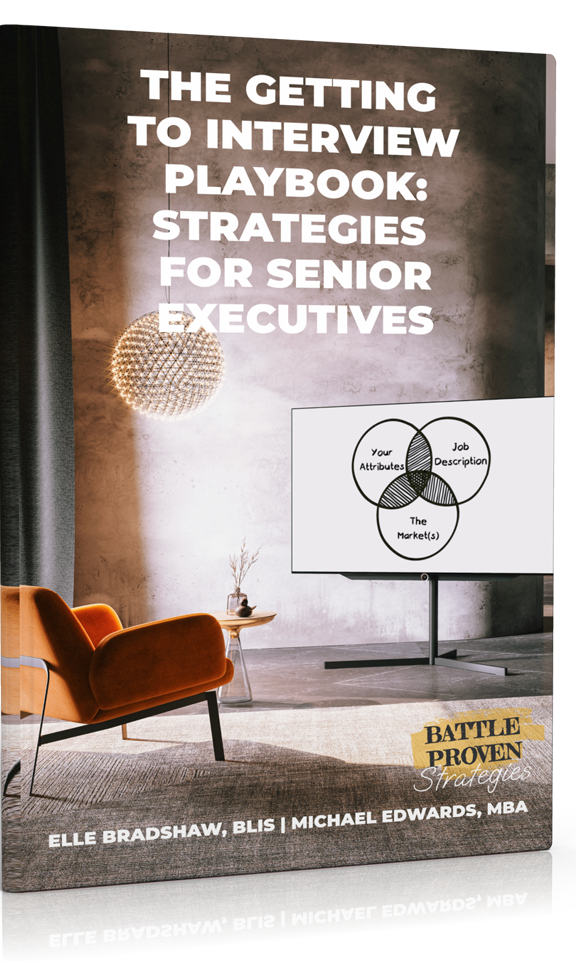
As my book The C-Suite Interview Playbook explains, relevance to selection criteria, both explicit and implicit, is the defining measure of a successful executive application. A Master CV supports a strategic, well-prepared, and considered approach to presenting an executive’s value and securing interviews.
My Two-Phase Executive Career Strategy Service
This service is for senior executives who need more than another CV rewrite. Phase 1 builds a private, well-evidenced account of your career and clarifies where your strongest value lies. Phase 2 applies that work to two live opportunities, showing how the evidence should be selected, reframed and aligned in practice. You work directly with me throughout, and the process can be adapted to your target roles, timing and current level of readiness.
Phase 1: Build the Evidence and Positioning
Career Direction – We begin with a detailed discussion of the roles, sectors, appointment types and longer-term options you are considering. This establishes what the Master CV needs to support.
Evidence Audit – I review your existing CV, LinkedIn profile and supporting material to identify strong evidence that is buried, missing, lacking context or being given the wrong weight.
Master CV Development – I personally create a private working record of your career history, qualifications, responsibilities, achievements, references and supporting evidence. It is not submitted to employers intact; it provides the material from which stronger applications can be built.
Achievement and Judgement Analysis – Together, we recover and examine the results, difficult decisions, turning points and problems solved that demonstrate your level. The aim is to move beyond descriptions of responsibility and establish credible evidence of value.
Transferable Value and Career Narrative – I identify the strengths that can travel across sectors, organisations and appointment types, then help clarify the thread connecting your experience to the work you want to pursue next.
Positioning and Pitch Guidance – We refine how you describe your value in writing and during recruitment conversations, including the likely concerns you may need to address and the evidence that best supports your case.
Phase 2: Apply It to Two Live Opportunities
Opportunity Assessment – I help you assess two agreed roles against your objectives, experience and likely prospects, so that effort is directed towards opportunities worth pursuing.
Employer and Role Research – I examine the published requirements, employer context, market conditions and likely reason for each appointment. This includes considering the explicit criteria and the concerns that may sit behind them.
Application Strategy – For each role, I determine the central case for candidacy, the evidence that should lead, the likely objections and the appropriate tone for the employer and decision-makers.
Two Bespoke Applications – I create a role-specific CV and cover letter for each of the two agreed opportunities, drawing from the Master CV rather than repeatedly adapting the same general document.
Pitch and Interview Preparation – We develop a concise account of your relevance to each role and identify the achievements, decisions and examples you should be ready to explain when challenged.
Practical Guidance for Future Use – The two applications demonstrate how the Master CV should be used: what to select, what to leave out and how the same career evidence may need to be framed differently for another employer.
What you receive – A private Master CV, a clearer account of your executive value, two bespoke CVs and cover letters, and a practical foundation for responding to future opportunities without reconstructing your career under pressure.
Selection criteria responses, LinkedIn profiles, executive bios and other substantial application documents can be scoped separately where required.
Broad sector experience helps me recognise the language, evidence and recruitment expectations that matter, while your expertise remains central. More...
I have substantial experience writing executive CVs and application documents for senior appointments across a wide range of sectors. That breadth gives me useful familiarity with different markets, regulatory settings, recruitment conventions and the types of evidence likely to carry weight.
Sector experience provides a stronger starting point. Familiarity with an industry helps me ask better questions, recognise relevant terminology and identify where achievements, responsibilities or context may not yet be clear to an external reader.
Your knowledge remains central. Only you have an intimate understanding of your sector, its dynamics and the circumstances in which you have operated. My role is to draw out that knowledge, test its relevance and translate it into evidence that recruiters, boards and other decision-makers can assess.
Every appointment still requires fresh research. Broad experience does not remove the need to examine the particular employer, role, market conditions, selection criteria and likely concerns behind an appointment.
I have authored executive CVs for applications to organisations in these sectors and appointment categories, among others:
Professional, Management, Executive and C-Suite CVs
CEO, director and senior executive roles across the private, public and third sectors
Overseas appointments and migration CVs for the UK, United States, Australia and New Zealand
Third-sector and not-for-profit executive appointments
Pharmaceutical, healthcare and NHS trust executive appointments
Financial services and insurance executive appointments
Senior appointments in primary, secondary and tertiary education
Construction and engineering executive appointments
Transport and logistics executive appointments
Technology, e-business and digital executive appointments
Retail and hospitality executive appointments
Government, county council, political and local authority appointments
Marketing and sales executive appointments
IT and information management executive appointments
Mining and resources executive appointments, including extensive sector experience
Franchisee applications, including major international brands
CVs submitted to these organisations
Click on the phone, anytime night and day, to book a complimentary 30 minute call at a time that suits you.
Frequently Asked Questions
CV Inclusions & Extras, CV lead-times, Getting Started & My Satisfaction Guarantee
Do I need a CV update or a full rebuild?
A senior executive CV may need rebuilding when the evidence is stale, the structure is working against you or the positioning no longer fits the roles you want. More...
Many senior executives ask for a CV update when the real problem is not adding lustre. The document may look professional, but still be built around an old target, an outdated level of responsibility or a career story that no longer fits the next move.
A standalone CV has limits. A senior executive CV should be viewed as a positioning document, not a bespoke application for every role. It can prepare you for general opportunities, recruiter conversations and broad role categories, but it cannot answer every advert, employer context or selection process.
A rebuild solves a different problem. It is needed when the CV has been amended in layers, carries too much legacy detail, buries the strongest evidence or reads like a record of employment rather than an argument for interview.
Specific applications need more. The days when a CV and lightly tailored cover letter were likely to get a senior candidate to interview are long gone. For a live application, the harder question is not whether the CV reads well. It is whether it is likely to pass screening.
Screening changes the test. If a role has stated criteria, a detailed job specification, a recruiter brief or an obvious screening process, a general CV is very unlikely to be enough. The CV, cover letter and any criteria response need to be aligned to the role, employer priorities and likely gatekeepers.
Strong evidence still needs direction. Otherwise, even impressive experience can miss the test being applied.
An executive CV should be shaped around employer needs, role requirements and screening priorities, not mirror your job description with embellished language. More...
The employer is not assessing your career in the abstract. The question is whether your evidence answers the needs, risks and priorities behind a particular appointment.
The employer sets the test. A strong executive CV starts with the role, not the candidate’s preferred account of their career. The job description, recruiter brief and organisational context indicate what the reader needs to find and what may cause hesitation.
Alignment is not imitation. Copying phrases from the advert or adding keywords is not enough. The work lies in selecting the right evidence, giving it proper weight and explaining why it matters to this employer.
The advert is rarely the whole brief. A role may have been created by growth, failure, succession, restructuring or changing market pressure. Research can reveal needs that are implied rather than stated, and these may be decisive at senior level.
Different readers apply different tests. An application may pass through ATS screening, HR, recruiters, search consultants and hiring executives before reaching the final decision-makers. Each needs enough relevant evidence to justify moving you forward.
Relevance makes experience persuasive. A career can be impressive and still be poorly aligned. The aim is not to repeat everything you have done, but to make clear why the right parts of your experience matter now.
Achievements should not be stacked like trophies. They need weighting, context and relevance, so the strongest evidence supports the role instead of disappearing in the noise. More...
An achievement only earns its place when the reader can see what changed, why it mattered and what part you played. A string of impressive figures without context is not evidence; it is decoration.
Start with relevance, not volume. Senior executives usually have more achievements than a CV can carry. The task is to select those that best prove the capabilities, judgement and value the employer is seeking.
Give the reader enough context. A result such as “reduced costs by 20%” means little unless the reader knows where, when, under what conditions and against what starting point. Context turns a claim into credible evidence.
Numbers need meaning. Revenue, savings, growth, headcount and turnaround figures can be persuasive, but only when they explain scale and consequence. The figure should support the point, not stand in for it.
Use achievements to prove transferable value. When direct experience is limited, well-chosen examples can show that your leadership, judgement, influence or problem-solving will travel. The reader should not have to work out the connection.
Show judgement as well as outcomes. Some of the strongest executive evidence concerns difficult choices, incomplete information, political resistance or recovery from a weak position. Not every valuable achievement fits neatly into a percentage.
Make your contribution clear. Executive outcomes are usually collective. The CV should distinguish what you led, influenced, decided or changed without claiming sole credit for the work of others.
Curate ruthlessly. The best achievement is not always the one you are proudest of. It is the one that gives this employer the clearest reason to believe you can meet the demands of the role.
A senior CV is not improved by adding everything. Irrelevant detail, old duties and weak claims can bury the evidence the reader actually needs. More...
The aim is not to make your CV shorter for its own sake. It is to remove anything that distracts from the evidence needed to support your next move.
Cut duties that add no value. Senior readers do not need a catalogue of routine responsibilities. Keep what establishes scale, authority or complexity, then use the space to show what changed because you were there.
Reduce outdated detail. Early roles, obsolete technical skills and old qualifications may still deserve a line, but rarely the same space as recent executive work. Career history should not crowd out current relevance.
Remove claims that cannot be proved. “Visionary”, “dynamic” and “results-driven” are easy to write and almost impossible to assess. Evidence of judgement, influence and delivery carries more weight than self-description.
Apply the Venn test. Give priority to evidence that sits at the intersection of what you offer, what the employer needs and what the market now values. Material outside that overlap must work much harder to justify its place.
Leave out what belongs elsewhere. References, salary expectations, lengthy explanations of departure and personal information seldom strengthen the CV. Some points are better handled in a cover letter, application form or conversation.
Do not hide awkward facts. Exclusion should sharpen the case, not mislead the reader. Career gaps, short tenures or unusual moves often need careful framing rather than silent removal.
Keep only what earns its space. Every detail should establish relevance, prove value, answer a likely concern or help the reader understand your level. The rest is competing with stronger evidence.
A strong executive CV does not ask the reader to infer your value. It turns experience into evidence, aligned to the role, level, risk and likely objections. More...
A strong executive CV is not a refined account of everything you have done. It is a selective case for why your experience matters to the role, the employer and the people deciding who progresses.
It must establish your level quickly. Senior readers should not have to search for the scale of your remit, the complexity of your decisions or the consequences of your work. Leadership scope, commercial responsibility, governance exposure and influence need to be clear.
Evidence matters more than adjectives. Claims such as “strategic”, “commercial” or “transformational” are easy to write and difficult to trust. The CV must show where those qualities were tested, what changed and how your contribution affected the outcome.
It must answer likely doubts. A strong CV does not only present strengths. It anticipates concerns about sector change, limited direct experience, career gaps, short tenures, overqualification or an unconventional route, then uses evidence to reduce the perceived risk.
It must work for more than one reader. ATS software, HR, recruiters, search consultants and senior decision-makers may all assess the same document. The CV must be searchable and easy to screen without becoming formulaic or mechanical.
It should sound like you. Inflated language and obvious AI phrasing can make an accomplished executive sound interchangeable. The written case must be credible in your voice and defensible when the interview moves beyond the page.
Its purpose is progression. The test is not whether the CV looks impressive in isolation. It is whether the right reader can understand your value, trust the evidence and justify taking you further.
Selection criteria are the employer’s marking guide. They show what must be proved, what should be prioritised and where a generic executive CV will fall short. More...
Selection criteria are not always labelled. They may appear as a person specification, essential and desirable criteria, role requirements, candidate profile, competency or capability framework, or success profile. Whatever the name, they reveal how the employer intends to compare candidates, what evidence must be visible and where an otherwise impressive executive CV may fail.
They define the test. Explicit criteria state what the employer expects. Implicit criteria sit behind the advert, the role context and the problems the appointment is intended to solve.
Claims are not evidence. Saying that you are strategic, commercial or influential does not prove that you meet a criterion. The application must show where those qualities were tested, what you did and what was accomplished.
Each criterion needs the right evidence. Some require achievements, others need examples of judgement, leadership, technical knowledge, stakeholder influence or performance under pressure. Treating them all alike produces a shallow response.
The documents must work together. The CV, cover letter and criteria response should support the same case without repeating one another. Each should add evidence or explanation that the others cannot carry as effectively.
Unanswered criteria create risk. A reader may admire your career and still screen you out if a stated requirement is missing, vague or left for them to infer.
Implicit criteria can decide the outcome. Employer research may reveal concerns about growth, recovery, succession, culture, regulation or market pressure. At executive level, these unstated needs can matter as much as the published list.
Alignment improves the odds of progression. The aim is not to mimic the job description. It is to make sure the evidence the employer needs is clear, credible and difficult to overlook.
If you are applying, for jobs the CV leads. If you need visibility, authority or recruiter interest, LinkedIn may be the better starting point. More...
The choice depends on what you need to achieve. A CV is usually the starting point for a live application; LinkedIn is often more useful when the aim is visibility, authority, headhunter interest, a long-haul job search, or a stronger public profile.
A CV carries the formal evidence. For a specific role, the CV must show how your experience meets the employer’s needs, selection criteria and likely screening tests. LinkedIn cannot replace that work.
LinkedIn serves a different audience. Recruiters, search consultants, board contacts, investors, clients, conference organisers and journalists may view your profile before asking for a CV. They need to understand quickly what you do, where your authority lies and why you are worth approaching.
A profile still needs strong raw material. LinkedIn cannot manufacture substance, as is evident in its abundance of business-speak slop. A credible profile needs evidence, career context, clear positioning and a proper understanding of the people you want to influence.
The two should align, not duplicate. Your CV can carry detailed evidence for a particular application. LinkedIn should present a broader, public-facing account of your expertise, network, interests and current direction.
Opinion leadership requires more than a rewrite. A strong profile can establish the foundations, but authority is reinforced through useful posts, articles, comments, speaking, media work and visible engagement with your field.
An executive bio may also be needed. A concise bio can support NED and board work, advisory roles, speaking, media appearances, portfolio careers and introductions beyond social media.
Start with the immediate need. If you have a live application, the CV usually comes first. If you need to be found, understood and taken seriously before a vacancy appears, LinkedIn and an executive bio may be the better place to begin.
Common errors include ignoring ATS, sounding obviously AI-written, using a one-size-fits-all CV, missing selection criteria, weak employer research and burying transferable value. More...
Most senior applications do not fail because the candidate lacks experience. They fail because the evidence is generic, poorly aligned, hard to find, difficult to trust or pitched in the wrong voice.
Underestimating automated screening. AI has made applying for executive applications quicker and easier, even by unqualified candidates, increasing the volume recruiters and employers must process. ATS and related screening systems may be used at several stages, by online platforms, recruiters, search firms and employers, not merely at the first gate. A refined but not focused CV can therefore be screened out more than once if its structure, terminology and evidence do not align with the role.
Using one CV for every role. A standard executive CV may support general positioning, but it is very unlikely to carry a specific application. A lightly altered cover letter cannot compensate for a CV that answers the wrong brief.
Missing the selection criteria. Employers may call them role requirements, a person specification, competencies, a capability framework or a candidate profile. Whatever the label, failing to address them leaves the reader with reasons to screen you out.
Sounding obviously AI-written. Generative AI can produce superficially impressive sentences at speed, but often removes voice, context and judgement. The result may sound fluent yet interchangeable, with claims that become difficult to explain naturally at interview.
Removing the human intelligence. Executive value is often found in difficult decisions, incomplete information, political resistance, unexpected change and responsibility for consequences. An application stripped of that lived complexity can make hard-won experience sound strangely weightless.
Under-researching the employer. Senior candidates are expected to understand more than the advert. Strategy, culture, market position, current pressures and the reason for the appointment can all affect what evidence should be emphasised.
Being too British. British understatement, indirect phrasing and modesty can read as uncertainty to American boards, excessive caution to European owners and muted authority to Asian decision-makers. The problem is not British English itself, but assuming its tone is universally neutral. In global hiring, tone becomes part of the evidence used to judge confidence, leadership style and cultural fluency.
Misreading the buying decision. Senior appointments are often influenced by a decision-making unit rather than one perfectly rational reader. HR, recruiters, search consultants, hiring executives, board members, investors or owners may each apply a different test, and any one of them may stop the application progressing.
Ignoring bias and irrationality. Risk aversion, familiarity, status, organisational politics, previous failures and personal affinity can all affect who is shortlisted. You cannot know every influence, but careful research can help identify likely objections, the people who must be persuaded and the evidence most likely to reassure them.
Burying transferable value. Candidates changing sector, geography or career direction often have relevant skills, but fail to make the connection explicit. The reader should not have to translate your experience for you.
Over-designing the CV. Graphics, columns, photographs and elaborate layouts can confuse screening systems and distract human readers. Seniority is not established by decoration. It is established by relevant evidence, presented clearly.
Senior executive, C-suite, NED and board appointments demand more than an effective CV. Career strategy clarifies the target, evidence, positioning and audiences before the application is built. More...
Senior executive, C-suite, NED and board appointments, alongside long-haul job searches, demand more than an effective CV. Career strategy clarifies the target, evidence, positioning and audiences before each application is built.
Direction comes before documents. A strong application depends on clarity about the roles, sectors, organisations and appointment contexts you are pursuing. Without that, even an effective CV can be aimed at the wrong target.
Senior appointments involve several audiences. Recruiters, search consultants, HR, executives, boards, investors and owners may each assess different risks. Career strategy helps determine what each audience needs to see, trust or question.
Your evidence needs a foundation. A Master CV can capture the achievements, transferable skills, judgement and career context needed for live applications, LinkedIn, recruiter conversations, executive bios and interviews.
Public positioning also matters. LinkedIn, opinion leadership, media visibility, speaking and an executive bio may influence people who never receive your CV, but still shape whether you are approached, recommended or shortlisted.
The strategy must carry through. Your written case, recruiter pitch and interview answers should reinforce one another. A strong application is of limited value if the argument falls apart when challenged.
Explore the wider strategy. The Career Strategy page explains how these elements fit together, and when a deeper foundation may serve you better than another isolated CV rewrite.
Answer a few short questions about your current career situation. We’ll direct you to the information and approach most likely to meet your needs.
What I promise
A serious executive CV service is not a production line. It is a private, senior-level engagement with someone who must understand your evidence before writing a word. You work directly with Elle, not a junior, contractor or bot, so the judgement behind the document is never outsourced.
Direct work with Elle - You work directly with Elle Bradshaw, not a CV mill, junior writer, offshore contractor or AI-led production line.
Personal executive CV service - Your CV, LinkedIn profile or application is handled as a senior-level project, not a form-filling exercise.
Human writing, not generic AI output - AI can add lustre to sentences. It cannot properly judge evidence, relevance, risk, omission or authentic voice.
Confidential and bespoke support - Sensitive career history, executive transitions and complex achievements are handled carefully, with language suited to the audience.
Clear communication - The process is collaborative, direct and practical, with no opaque hand-offs or automated workflow pretending to be expertise.
I don’t outsource the thinking, the judgement or the writing. When you work with me, you work directly with the person assessing your evidence, asking the awkward questions and shaping the argument, while keeping it in your voice. Your career is too important to be fed into a template, passed down a production line or returned with shinier adjectives.
~ Elle Bradshaw
How my work is different
A compelling board-level CV is not a candidate’s trophy cabinet. It is written for people who must justify risk: chairs, nominations committees, investors and advisers. It must give them evidence of decision quality, governance maturity, commercial acumen and influence, framed around what they need to trust, test and defend.
Evidence curation - Your experience is curated, not merely transcribed: what to cull, what to highlight and what evidence will matter.
Selection criteria alignment - CVs are built around employer needs, selection criteria and the evidence needed to pass screening.
Gatekeeper awareness - Senior applications are written for ATS filters, HR, recruiters, search consultants and hiring teams, not just the final decision-maker.
Employer relevance - The focus is not self-promotion. Achievements are framed to show why they matter to the role, the employer and the people deciding who progresses.
Master CV foundation - Where one CV is not enough, Elle can build a strategic evidence base for future CVs, LinkedIn, recruiter conversations, applications and interviews.
We all bring a different mix of skills, knowledge, experience and achievements. The trouble is that employers do not value them equally. If a CV gives everything the same weight, the evidence that could secure the interview gets buried. My work is about deciding what matters, what distracts and how to align the CV with what the employer needs.
~ Elle Bradshaw
About me, Elle Bradshaw
Executive CV Writing & Advice
Hello, I’m Elle. I personally handle every project, so your CV is not passed to a CV mill, contractor, junior writer or bot. With more than fifteen years in recruitment marketing and CV strategy, I’ve witnessed why strong candidates are shortlisted, and why equally strong candidates are screened out.
Given the ocean of ordinariness in poorly targeted and inartfully GPT’d executive CVs, it helps that I am also a qualified marketer, author and seasoned HR consultant. I understand how to turn career history into a persuasive pitch, focused on the employer’s needs rather than the candidate’s preferred autobiography.
My first loves were creative writing and puzzle-solving, which turns out to be useful in executive applications. The work is part analysis, part evidence, part language and part judgement: teasing out what an employer needs, matching the right experience to those needs, reading the cultural cues and helping the application clear the gatekeepers en route to interview.
I know what reinvention feels like. I started in a biscuit factory, earned my degree while pregnant and working full-time, became an AstraZeneca information scientist, then moved into international HR, recruitment marketing and self-employment. That helps me explain unconventional routes without sounding defensive.
I’m a qualified marketer, digital native and seasoned writer, so I understand how applications are screened, skimmed and judged. Your CV should not be a list of jobs with better adjectives. It should be a persuasive argument for why your experience is relevant, valuable and worth taking to interview.
This eclectic background gives me an unusual mix of skills: the marketing discipline to tease out employer needs, the HR experience to recognise how applications are screened, the writing ability to craft persuasive narratives, and the digital nous to create documents that can clear ATS filters without losing their human voice or executive credibility.
Hi Elle, I just want to say thank you for the work you did to make my CV application for the CEO (of a major sporting body)* stand out. It has been a pleasure working and interacting with you during the process. You answered every question, right down to - what format should I send the application in. I would have got it very wrong, but you referred me back to the job ad and showed me what to do next, your patience with my obvious lack of knowledge of how to do these things is very much appreciated as I know I would have never gotten to the interview, despite being well known in the sporting world.
*organisation name withheld
- W.S. (CEO)
As an executive, I thought I knew exactly what was required in making job applications, but after three months of not getting a single interview, I went to Elle for advice. This changed my perspective as she explained new concepts like keywords, effective CV structure, and the importance of having a tailored CV and cover letter for each application. Her service was outstanding; she listened to my needs and provided a CV that truly reflected my career aspirations and highlighted my key strengths. I highly recommend Elle to anyone looking to maximise their chances of getting to interview for executive and c-level appointments. She truly is the best in the business.
- D. B. (Logistics Director)
I was struggling to get interviews for the jobs I was applying for, and I knew my CV was not up to the standard it should be. But I couldn't see that I wasn't presenting myself in a way that was attractive to employers. I reached out to Elle through a recommendation from a friend, and she was able to guide me to create an exceptional CV that truly reflected my skills and experience. Her attention to detail in matching my experience with the employer's ad and ability to highlight my achievements made all the difference. I have since received multiple interview opportunities, and it's all thanks to Elle.
- R. L. (CFO)
I recently had the pleasure of working with Elle to revamp my CV and cover letter. Elle was professional, efficient, and provided great personal guidance throughout the process. She took the time to understand my career goals and highlighted my strengths in a way that truly set me apart from other candidates. She also provided tons of motivation to aim high! Thanks to Elle, I have a better perspective on how my strengths can be articulated and harnessed to further my career and also where I may have been going wrong in my job search. Within two weeks, I was able to secure an interview for a job that I wouldn't have considered myself qualified to apply for. I genuinely recommend her services to anyone looking to not only get a job but to get a great one.
- A.A. (Former GM, returning to work)
I honestly cannot speak highly enough of the exceptional work Elle has done for me. After numerous failed attempts with online CV services that relied on poor formatting and obvious AI content, working with Elle was a breath of fresh air. She created a CV, cover letter and LinkedIn profile that finally got me through ATS screening and in front of recruiters. Within a couple of months I secured an excellent contracting role. Elle has since updated my CV again as my contract has ended, and I am confident I will secure another role quickly with her support. I cannot thank her enough. In what has been the toughest job market of my 31-year career, she genuinely restored my confidence and momentum.
These are genuine reviews that are obviously anonymised. I can provide referees upon request
Robot-led CV writing makes you sound generic, keyword-stuffed, foreign or misaligned to the job description. I can spot it a mile off, and so can most HR people. It’s the same wording, line spacing, punctuation and it's cliche-ridden. So ironically you might be rejected for not being a real person!
Elle Bradshaw in a The Daily Telegraph article by Liz Hoggard.
Books & Guides
Why strong executives are screened out, how decision-makers assess risk, and how applications and interviews must answer both stated and unstated criteria.
Book a 30 min. phone call with Elle
Click on the phone to book a complimentary 30 minute call to discuss your Executive career trajectory, at a time that suits you.
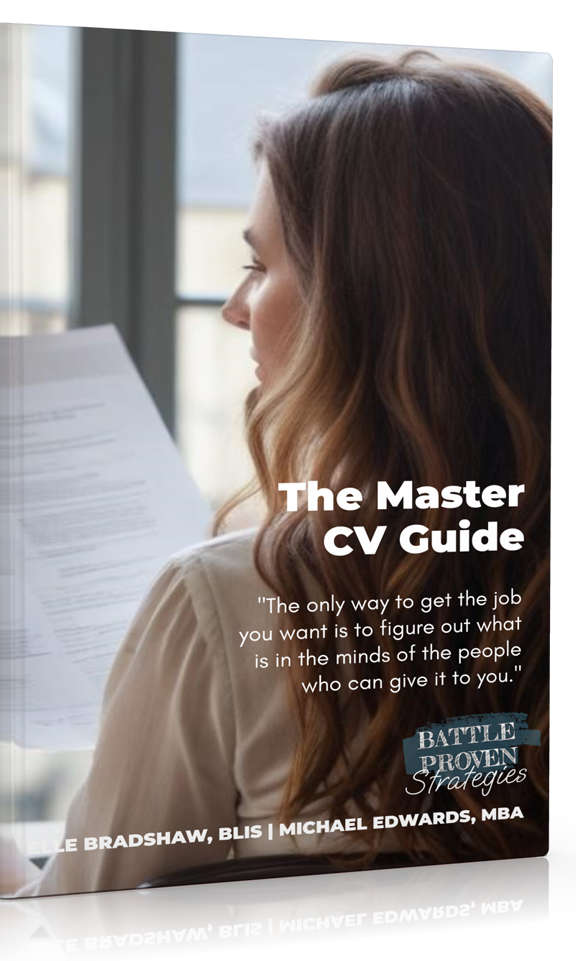
A Master CV supports a strategic, well-prepared, and considered approach to presenting an executive’s value and securing interviews. This guide explains how.
CVs submitted to:
These are a selection of organisations to which I have helped clients apply for jobs or provided career coaching and outplacement services.
Clients' CVs submitted to:
These are a selection of organisations to which I have helped clients apply for jobs or provided career coaching and outplacement services.
Centred upon London and working directly with clients across the UK and internationally, I provide a personal executive CV and career strategy service for senior executives, C-suite leaders, board and NED candidates, political and public-sector applicants, third-sector leaders and senior professionals. The work may include an executive CV, cover letter, selection criteria response, LinkedIn profile, executive bio or Master CV foundation. Every project is handled personally by me, with the evidence shaped around the role, employer and people deciding who progresses.
Executive CV Writer in London and Nearby Areas
Many clients begin by looking for an executive CV writer near them in London, but the more important question is whether the writer understands senior appointments and works with them directly. I support clients across Central London, the City, Canary Wharf, Westminster, Kensington and Chelsea, Richmond, Kingston, Wimbledon, Bromley, Croydon, Barnet, Harrow and the wider London area. Services include executive CV writing, role-aligned cover letters, selection criteria responses, LinkedIn strategy and executive biographies.
Executive CV and Career Strategy Across the Home Counties
I also work with senior clients throughout the areas surrounding London. This includes Surrey, with clients in Guildford, Woking, Reigate, Redhill, Epsom and Camberley; Berkshire, including Reading, Slough, Windsor, Maidenhead, Newbury and Bracknell; and Buckinghamshire, including Milton Keynes, High Wycombe, Aylesbury, Marlow and Amersham. The service is suited to executives seeking C-suite, board, NED, public-sector, partnership and senior professional appointments, as well as those preparing for a longer job search or change of direction.
Executive CV Services in Oxfordshire and Southern England
I work with executives in Oxford, Abingdon, Banbury, Bicester, Didcot, Henley-on-Thames and elsewhere in Oxfordshire, as well as across Southern England. This includes Hampshire locations such as Winchester, Southampton, Portsmouth, Basingstoke and Farnborough; Kent, including Canterbury, Maidstone, Ashford and Tunbridge Wells; and Sussex, including Brighton, Crawley, Eastbourne, Worthing and Hastings. Consultations are conducted by phone or video, so proximity is available where useful without limiting the service to one locality. The focus remains the same: credible evidence, clear positioning and applications aligned with employer needs rather than generic templates or automated rewriting.
London CV Writerⓒ Vive optimum vitae
Discretion and Privacy
All discussions, documents and personal information are treated in strict confidence. I work with you directly and never disclose your identity, instructions or materials to any third party without your express permission.